
The Moral Argument for God
I recently did another debate with my friend Ben. We've been taking turns defending some of the most popular theistic arguments. This month, he was defending William Lane Craig's version of the moral argument for the existence of God. Here's the basic argument:
- If God does not exist, objective moral values do not exist.
- Objective moral values do exist.
- Therefore, God exists.
Review of “The Reason for God” (Part 1)
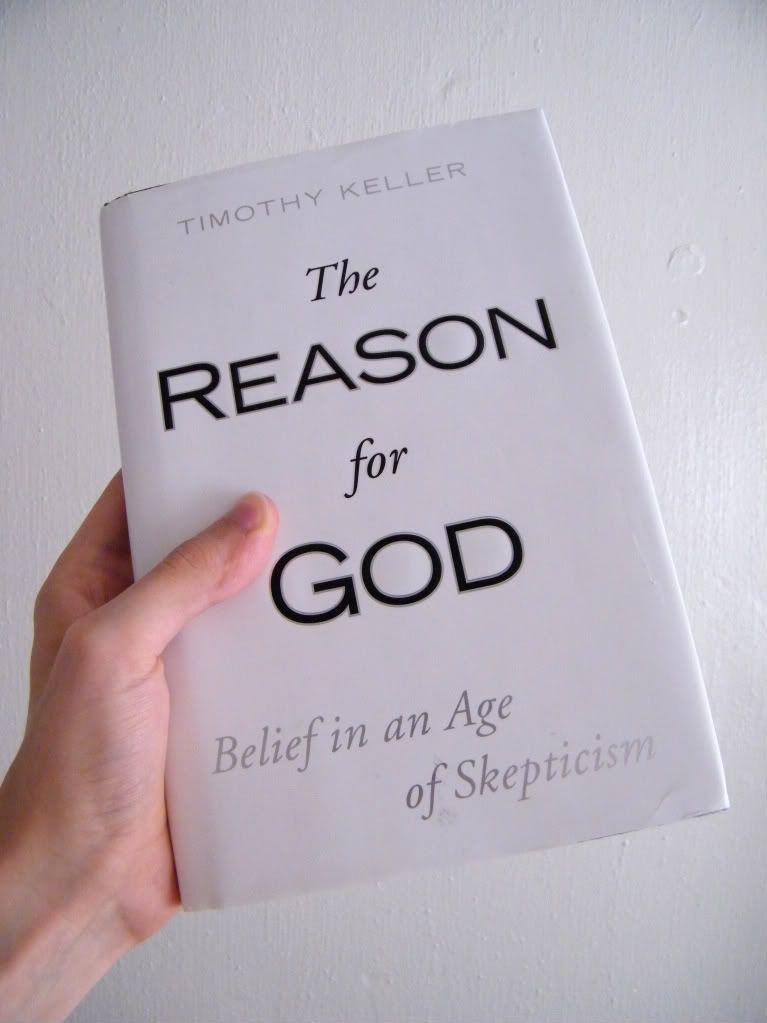
Even though I believe the book fails at persuading thoughtful nonbelievers, it has become quite popular. It has been the top selling apologetics book an Amazon for months and even reached #7 on the New York Times Best Seller list for non-fiction. I’ve also spoken to a couple people who highly recommended Keller’s work.
Although I find the book unpersuasive, Keller does make a lot of good points. He even recognizes that religion is one of the main barriers to world peace. “Each religion informs its followers that they have “the truth,” and this naturally leads them to feel superior to those with differing beliefs. … Therefore, it is easy for one religious group to stereotype and caricature other ones. Once this situation exists it can easily spiral down into the marginalization of others or even to active oppression, abuse, or violence against them” (page 4).
I also completely agree with what he says about doubt. “A person’s faith can collapse almost overnight if she has failed over the years to listen patiently to her own doubts, which should only be discarded after long reflection. Believers should acknowledge and wrestle with doubts—not only their own but their friends’ and neighbors’. It is no longer sufficient to hold beliefs because you inherited them” (xvii).
This should apply not only to believers, but to atheists as well. Atheists should be just as willing to consider objections to their beliefs. As Keller points out, if someone believes that God does not exist because she says that “There can’t just be one true religion,” but does not have good evidence to back up that statement, believing it is an act of faith.
However, Keller errs when he says that “All doubts, however, skeptical and cynical they may seem, are really just a set of alternate beliefs. You cannot doubt Belief A except from a position of faith in Belief B. … Every doubt, therefore, is based on a leap of faith” (xvii). If I say that I’m going to flip a coin and it will come up heads, you can doubt that it will come up heads without having to believe that it will come up tails. If you don’t think that we have a good enough idea of the values in the Drake equation to say whether there is intelligent life on other planets, you can doubt someone’s claim that there is extraterrestrial life without believing that there isn’t. It is possible to simply say, “I don’t know.”
In order to doubt that Christianity is true, you don’t need an argument to show that it is false, just as you can doubt that invisible unicorns exist even without an argument showing that they do not exist. Of course, many atheists do believe that things like the problem of evil are evidence against Christianity, but even if all those objections were refuted, it would not show that Christianity is true. There could still be no good reasons to believe in it, just as there are no good reasons to believe in invisible unicorns (as far as I know).
Early in the book, Keller describes his own religious journey. Growing up in the ‘60’s, he saw “two camps before [him], and there was something radically wrong with both of them. The people most passionate about social justice were moral relativists, while the morally upright didn’t seem to care about the oppression going on all over the world” (xii). He was drawn to the former camp, but kept asking himself: “If morality is relative, why isn’t social justice as well?” I agree with Keller that both of these camps have it wrong, but these are definitely not the only camps. While Keller ended up in the camp of Christians who care about social justice, I ended up in the camp of atheists who reject moral relativism and care about making the world a better place.
The Reason for God is broken up into two parts. In the first half, Keller attempts to refute what he sees as some of the incorrect faith beliefs of nonbelievers which stand in the way of them believing in God. In the second, Keller explains what he sees as sufficient reasons for believing that Christianity is true.
He opens the first half of the book by addressing the claim that “There can’t be just one true religion.” I agree with him that this is a bad reason for thinking that Christianity must be false. The diversity of religions does mean it’s unlikely that we happened to be raised into the one true religion and gives us a good reason to examine whether there is evidence for our religious beliefs. But it does not show that all religious beliefs are false or that all religious beliefs are true any more than a diversity of moral beliefs proves moral nihilism or moral relativism.
In the next chapter, he engages with the biggest objection many non-believers have: the problem of evil. He rightly points out that “just because you can’t see or imagine a good reason why God might allow something to happen doesn’t mean there can’t be one” (23). I agree with Keller that my own inability to think of good reasons why an omnibenevolent God would permit the Holocaust is no proof that there aren’t any.
Even if horrendous evils are not a logical disproof of God, they at least seem like evidence against the existence of such a God. This world is far different than what I would expect if the world had been created by a perfect God. However, a lot has been written on the problem of evil, so I feel I should read more before being confident that the evidential argument from evil can withstand all objections (I’m particularly interested in reading The God Beyond Belief, in which Christian philosopher Nick Trakakis argues that the evidential problem of evil does provide evidence against Christianity).
But even if Keller’s approach, which is known as skeptical theism, is a sufficient answer to the problem of evil, it has consequences that Christians might be unwilling to accept. Skeptical theism asserts that an inability to think of a morally sufficient reason for God having done something is no evidence that God didn’t have a morally sufficient reason. As I discussed in previous post, if skeptical theism is true, then our inability to think of a morally sufficient reason for why God would lie to us about heaven existing is no evidence that God didn’t have a morally sufficient reason to lie about heaven. Accepting skeptical theism means accepting that you have no good reasons to believe that the most basic tenants of the Christian faith are true.
Keller also describes people who went through periods of suffering and became better because of it. This is a good point. I’ve had some rough periods in my own life, and I definitely think that temporary suffering can sometimes help change one’s life for the better. However, it is very hard for me to accept that that the Holocaust made all the Jews better off or that a young girl who is gang raped and then killed benefits from the experience.
Keller then argues that evil is actually a bigger problem for atheism than for theism. He says that without God, there is no good basis for saying that an action is good or evil. But here he is guilty of what he just accused atheists of. He assumes that an inability to think of a good basis for morality outside of God means that there can’t be one. I, as well as many moral philosophers, do believe that morality can exist without God. But even if we are all wrong, this wouldn’t prove that God exists, it would instead show that theism would be more desirable than atheism for people who want morality to exist. Similarly, belief in God is more desirable for people who want to live forever, but this doesn’t prove that God actually exists.
Christianity also has a problem of saying what the basis of morality is. Many Christians say that it is God’s benevolent nature. But is his nature good just because it happens to be God’s, or is it good because it is consistent with some principles of moral goodness. If it’s the former, then if God had thought murder was good and love was evil, murder actually would be good and love would be evil. It would then be omnibenevolent of God to hate and kill everyone. In this case, it seems meaningless to call God good. But if you take the latter approach and say that God’s nature is good because it adheres to principles of moral goodness (such as kindness and fairness), then you still have to give a basis outside of God for those moral principles. And this is even more problematic for Christians, since it is very hard to come up with an ethical system under which all the things the Bible says that God did would be moral (1 Samuel 15, Numbers 31, and Exodus 11 are particularly problematic).
Not only does atheism provide a better answer to why there’s evil in the world (animals that kill and eat other animals have a better chance of surviving and passing on their genes), it is also better able to give a basis for morality.
Atheist Rift?
Earlier this week, Barbara Bradley Hagerty did a piece on atheism for NPR entitled “A Bitter Rift Divides Atheists.” In it, she describes what she sees as a major split between New atheists like Christopher Hitchens and old school atheists like Paul Kurtz. There certainly are differences of opinion within the atheist community, but I think she greatly exaggerates them.
There are no atheist dogmas that we are fighting over; the dispute she talks about is primarily about tactics. Just because people have different views about what are the most effective ways of promoting a positive atheistic worldview doesn’t mean that there’s a civil war going on. All groups have some disagreements over tactics. For example, I’m sure there are some people in the pro-life movement who see it as counterproductive to show people pictures of bloody aborted fetuses, but they’re all still united in their shared goal of reducing the number of abortions.
Personally, I don’t see myself as a member of either camp. I don’t agree with everything Hitchens says, and I don’t agree with everything Kurtz says. But I think they both have important points to make.
I disagree with some New atheists who think that all religion is inherently evil. Certainly some religions have done immense harm to society, and we have a moral imperative to prevent the severe abuse that is sometimes done in the name of religion. But there are other religions like Jainism that do not cause people to harm others. I think that they are still delusions in the sense that they are false beliefs, but they may be relatively harmless delusions. I don’t see any more reason to actively fight against them than I do against non-religious beliefs that I see as harmless delusions, like contra-causal free will and Platonic realism.
I also think that some of the arguments the prominent New atheist authors use are philosophically weak and are easy to rebut. For example, I do not think that Dawkins’ “central argument” in The God Delusion is very strong. This bothers me because I fear that someone who thinks that they should expose themselves to at least one atheist book may read The God Delusion and then come away with an even stronger belief in God after finding problems with a couple of his arguments. Dawkins does make some very good arguments as well, but when someone finds a couple flawed arguments, they may just assume that the rest are flawed as well. But despite their flaws, and we’re all flawed somehow, I think the New atheists have done a very valuable service by getting the atheist message out there. While I may think that people like Graham Oppy make stronger arguments for atheism than Dawkins or Hitchens, you don’t get your message out in the mainstream media by writing philosophically rigorous criticisms of theistic arguments.
But I also have strong disagreements with some of the old atheists. I do not think we should keep our beliefs to ourselves, and I do not think that religion should be accorded some special status as an issue that it is taboo to discuss. I also definitely do not think that science and religion should be treated as Non-overlapping magisteria. As long as religions make testable claims like saying that prayer works, science has a right to test those claims. I also believe that blasphemy really is a victimless crime. While there probably are conditions where it could be counterproductive, it can also be a powerful demonstration of the religious freedom and free speech rights that our country was founded upon, as well as sending an important message to believers that not everyone shares their views. Trying to avoid offending any believers would be a fool’s errand, for there are some people who are offended by the mere existence of atheists.
Yet, I do agree with some of the points Paul Kurtz makes in the piece. Atheism itself is simply a lack of belief in God. In order to make the world a better place, we need to go beyond simple disbelief and explore issues of morality.
While the people who get the most media attention are the New atheists and their strongest opponents, I think there are actually quite a lot of atheists like me who are somewhat moderate. I don’t think atheists should be shy about their beliefs, but I also think that bashing religious people for the fun of it isn’t the way to get people to take your arguments seriously. I like making people really think about what they believe and why. People should look closely at whether they have good reasons to believe that their religion is the one that happens to be true. There’s no perfect way to do this; sometimes it helps to be understanding, and sometimes it helps to show how silly their beliefs really sound to someone not brought up in the religion. For example, it’s true that the God most people believe in is a magical invisible being who grants wishes. If I realized that one of my core beliefs seemed silly, I'd really want to research it to see whether or not it’s true.
But it’s also important to be understanding. I’ve had plenty of false beliefs over the years, and it’s never fun to have your own ignorance exposed. However, I still welcome learning that one of my beliefs is false because that’s the only way I come to know what’s true and because it can be dangerous to act on false beliefs. Just because there is tons of stuff I’m wrong about does not mean I’m a stupid person, and the people I appreciate the most are those who point out my errors with kindness and humility. At least that’s what I think is the best approach.
Atheists are never going to agree on everything, just like theists are never going to agree on everything. But the two things atheists share are a lack of belief in God, and the desire to make the world a better place.
